

How to Prevent Black Ice Before It Turns Driveways, Sidewalks, and Parking Lots Into Trouble
- Mikhail M.
- Aug 12
- 5 min read

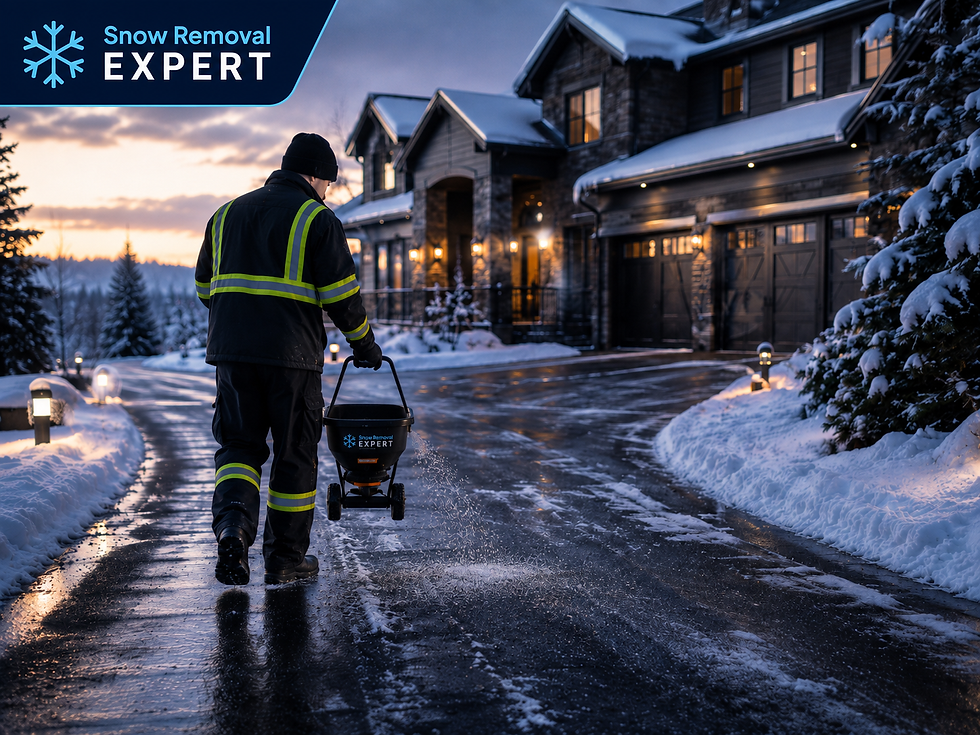
Multi-Family Winter Access Coordination
How to prevent black ice starts with one honest detail: most black ice problems begin before anyone notices them.
A walkway looks wet. A driveway looks clear. A parking lot looks finished after plowing. Then the temperature drops, the surface freezes, and suddenly the safest-looking area becomes the most dangerous part of the property.
That is why multi-family winter access coordination matters. Shared properties have more movement, more surfaces, and more chances for meltwater to travel where it should not. Residents use side doors. Visitors cross parking rows. Delivery drivers stop near curbs. Waste collection areas stay active. Every one of those zones can become a black ice problem if drainage, snow piles, and follow-up treatment are ignored.
For properties in Coquitlam, black ice prevention should focus on the surfaces people use repeatedly: shared sidewalks, lobby entrances, ramps, driveway slopes, visitor parking, and shaded access paths.
The goal is not simply to react after ice forms. The goal is to stop wet surfaces from becoming ice in the first place.
Urban Strata Snow Response Strategy
An urban strata snow response strategy needs to work in tight spaces.
Strata properties often have limited snow storage, underground parkade entrances, narrow walkways, shared stairs, loading zones, and concrete surfaces that stay shaded for much of the day. These areas may not hold deep snow, but they can hold enough moisture to create black ice overnight.
The biggest mistake is treating snow clearing and black ice prevention as separate jobs.
They are connected.
Where snow is pushed affects where water flows. Where water flows affects where ice forms. Where ice forms affects how residents, guests, and service crews move through the property.
For properties in Burnaby, urban strata snow response strategy should include shaded entrances, sloped walkways, parkade ramps, and places where meltwater runs from snow piles back across pedestrian routes.
A clean-looking surface is not always a safe surface. In winter, wet pavement deserves attention before it becomes invisible ice.
Black Ice Starts Where Water Gets a Chance to Wait
Black ice prevention is mostly water management.
If water has nowhere to go, it waits. If it waits long enough during cold weather, it freezes. That means property owners and managers should treat drainage as part of their winter safety plan, not just a summer maintenance issue.
Check drainage paths before storms
Look at where water naturally travels.
Driveway edges, curb lines, parking-lot drains, low spots, gutter outlets, and sidewalk depressions all matter. If water crosses a walking route or sits near an entrance, that zone should be treated as high risk.
Move snow piles away from active routes
Snow piles melt during the day and refreeze after temperatures fall.
If piles are placed beside a walkway, curb ramp, driveway slope, or storefront entrance, they can keep feeding the same icy patch again and again. Better pile placement reduces repeat treatment.
Watch shaded surfaces closely
Shaded areas freeze faster and thaw slower.
North-facing walkways, areas beside tall buildings, covered entrances, tree-shaded concrete, and parkade ramps often need extra monitoring, even when sunnier surfaces nearby look fine.
Prevention Steps by Surface Type
Different surfaces need different prevention steps.
Driveways usually need early clearing, attention to slope, and careful treatment near the garage apron. If snow melts from piles along the side and runs back down the driveway, black ice can form where vehicles brake or turn.
Sidewalks need consistent clearing and follow-up checks. A sidewalk may be safe at noon and slippery by evening if packed snow melts under foot traffic and freezes again. Pay close attention to curb ramps, stairs, entry paths, and places where roof runoff crosses the walkway.
Parking lots need a broader plan. Main drive lanes, pedestrian crossings, accessible stalls, loading areas, cart paths, and low spots should all be checked after snow removal. Black ice often forms where tires drag slush across cold pavement or where meltwater moves from piles into traffic areas.
Pretreatment can help before a forecasted freeze, but it should be used thoughtfully. More product is not always better. The best results usually come from clearing snow early, applying the right material in the right amount, and checking the surface again after conditions change.
Snow Removal Expert supports property owners and managers with fast, reliable snow clearing, modern equipment, 24/7 service, safety-focused ice control, transparent pricing, and convenient scheduled plans.

Pretreat, Monitor, Repeat: The Quiet Work That Stops Ice
Black ice prevention is rarely a one-pass job.
The surface may need attention before the storm, after clearing, and again when temperatures fall. That does not mean every area needs constant treatment. It means high-risk zones should be identified before crews are under pressure.
Pretreat before the freeze
Pretreatment can help reduce bonding when freezing rain, light snow, or overnight refreeze is likely.
The key is timing. Applying material too late may not help much. Applying too much can create residue, runoff, and unnecessary surface stress.
Monitor after snow removal
After snow is cleared, inspect the wet areas.
Look for shiny pavement, slush trails, tire-packed snow, shaded patches, and water running from piles. These are the places most likely to become black ice later.
Use traction when melting is not enough
Sometimes traction is the better short-term option.
Sand or grit can help improve grip when ice is present or when temperatures make melting less reliable. It does not remove the ice, but it can reduce slip risk while crews continue monitoring and treatment.
Build a Black Ice Prevention Plan
A strong black ice prevention plan should be simple enough to follow during bad weather.
Start by mapping the property. Mark driveway slopes, sidewalk low spots, shaded entrances, parking-lot drains, snow storage areas, and places where meltwater usually crosses active routes.
Then set priorities. Which surfaces must stay safest first? For most properties, that means entrances, ramps, stairs, accessible routes, pedestrian crossings, loading areas, and main drive lanes.
Next, decide when follow-up visits or inspections should happen. Morning clearing may not be enough if temperatures drop after sunset. A post-storm inspection can catch wet surfaces before they freeze overnight.
Finally, keep notes. Record where black ice appears, which areas needed retreatment, and where snow piles caused meltwater problems. Those notes make the next storm easier to manage.
If the goal is to prevent ice on driveway surfaces, sidewalks, and parking lots, the answer is not one product or one quick pass. It is a plan: clear early, control drainage, place snow carefully, pretreat high-risk zones, monitor shaded areas, and follow up before refreeze returns.
Black ice is hard to see, but the conditions that create it are usually predictable.
Build a black ice prevention plan before the next freeze, and winter access becomes safer, cleaner, and easier to manage.


Comments