


As seen on


Snow Removal Expert is a direct national service provider delivering commercial, strata, and residential snow removal services engineered for Canadian winter conditions.
We do not operate as a marketplace or referral platform.
We provide front-facing, fully managed winter maintenance services supported by scientific monitoring, documented dispatch protocols, and structured risk management.
Our winter operations include:
Snow plowing services
Snow clearing services
Ice management and de-icing
Anti-icing and surface pre-treatment
Slip-and-fall risk reduction
Compliance-ready documentation
Winter safety is not cosmetic maintenance. It is a public safety operation.

What Is Snow Removal?
Snow removal is the process of clearing accumulated snow and managing ice formation on roads, sidewalks, parking areas, entrances, and pedestrian surfaces to maintain safe access during winter conditions.
In Canada, snow removal includes both:
-
Plowing (pushing snow aside), and
-
Removal (hauling snow off-site when space or volume requires it).
Professional snow removal services extend beyond plowing and typically include:
-
Ice control and salting
-
Sidewalk clearing
-
Snow hauling
-
Weather monitoring
-
Risk documentation
In many regions of Canada, snow removal is legally and operationally tied to liability prevention.
What Is Ice Management?
Ice management is the proactive control of freeze–thaw conditions to prevent hazardous ice formation before it becomes visible.
Unlike simple snow clearing, ice management focuses on:
-
Pavement temperature
-
Moisture presence
-
Refreeze risk
-
Salt decay timing
-
Surface thermodynamics
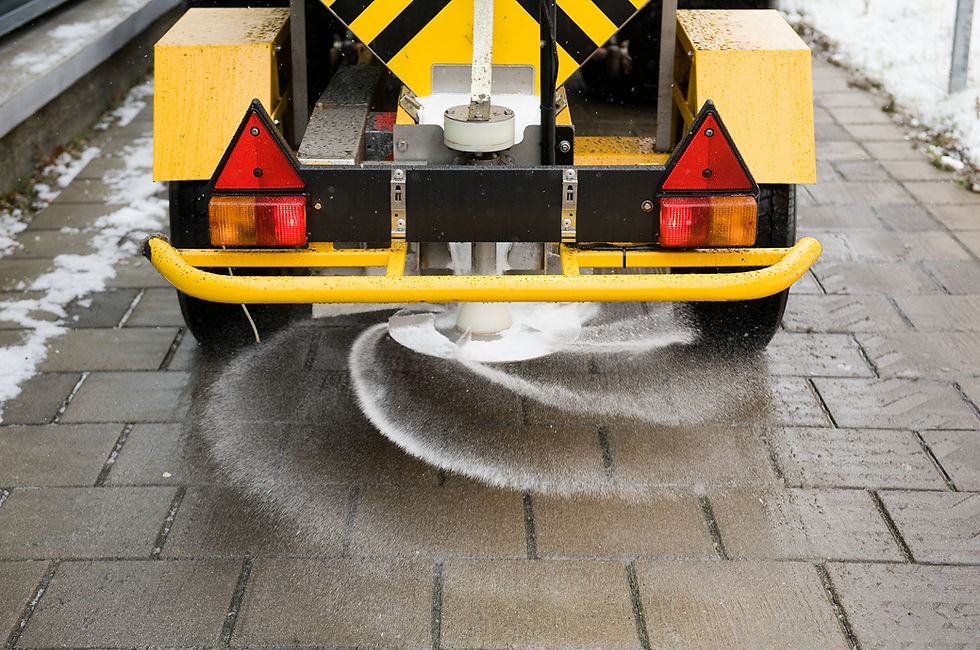
Anti-icing refers to applying treatment before ice forms to prevent bonding.
De-icing refers to breaking down existing ice after formation.
In much of Canada, especially in transitional climates, ice formation — not snowfall depth — is the primary hazard.


Snow Removal Is a First-Response Public Safety Operation
Snow removal is legally required in Vancouver under Street and Traffic By-law No. 2849.
Winter maintenance in Canada directly affects:
-
Pedestrian safety
-
Emergency access
-
Business continuity
-
Municipal compliance
-
Insurance exposure
Slip-and-fall injuries during winter are a significant source of claims and litigation across Canada.
The Canadian Centre for Occupational Health and Safety identifies slips and falls as a leading cause of injury in workplace and public environments:
https://www.ccohs.ca/teach_tools/phys_hazards/slips.html
Snow removal and ice control should be treated with the urgency of first-response safety operations — not discretionary property upkeep.
Why Snow Removal in Canada Is Operationally Complex
Snow removal in Canada differs from many other countries due to:
-
Sustained snowfall accumulation in some regions
-
Freeze–thaw cycling in transitional climates
-
Urban density constraints
-
Limited snow storage space
-
High reliance on salt and brine
-
Municipal and private responsibility overlap
In dense urban environments, snow must often be hauled away rather than simply plowed aside.
In freeze–thaw climates, the primary danger window occurs when temperatures fluctuate between 0°C and 5°C, creating repeated melt-and-refreeze cycles.
The complexity of Canadian winter conditions requires structured dispatch triggers — not reactive guesswork.

National Winter Liability & Slip-and-Fall Exposure
Across Canada, winter liability is governed by provincial occupiers’ liability legislation.
In general, property owners and occupiers must:
-
Take reasonable steps to maintain safe premises
-
Address foreseeable hazards
-
Act within a reasonable timeframe
To establish negligence, claimants typically must prove:
-
A hazardous condition existed
-
The occupier knew or should have known about it
-
Reasonable action was not taken
-
The failure caused injury
Insurance Bureau of Canada reports that severe weather continues to drive billions in insured losses annually:
https://www.ibc.ca/news-insights/news/severe-weather-in-2023-caused-over-3-billion-in-insured-damage
Winter risk exposure is not hypothetical. It is measurable and documented.
Effective snow removal services are structured to reduce liability — not merely clear surfaces.
Commercial Snow Removal Services
Commercial snow removal services are structured, 24/7 operations designed to maintain safe access to:
-
Parking lots
-
Loading docks
-
Retail entrances
-
Office complexes
-
Industrial yards
-
Healthcare facilities
Professional commercial winter maintenance typically includes:
-
Trigger-based dispatch
-
Anti-icing protocols
-
Salt application management
-
Snow hauling when required
-
Documented service logs
-
Equipment fleet readiness
Commercial properties require reliability before business hours, during overnight storms, and during rapid refreeze transitions.
Strata & Multi-Unit Snow Removal Services
Strata and multi-unit properties face elevated winter risk due to:
-
High pedestrian traffic
-
Shared access corridors
-
Sloped parkade ramps
-
Walkways and stair systems
-
Visitor and delivery access
Strata winter maintenance requires:
-
Site-specific operational planning
-
Clearly defined trigger depths
-
Documented response times
-
Ice monitoring beyond snowfall events
Inconsistent service and poor documentation are among the leading pain points for property managers during winter months.
Residential Snow Removal Services
Residential snow removal focuses on:
-
Driveways
-
Sidewalks
-
Entryways
-
Stair access
-
Black ice prevention
While snowfall volume varies across Canada, freeze–thaw cycling can create morning ice hazards even after minimal precipitation.
Residential winter maintenance is increasingly tied to liability awareness and proactive surface treatment rather than simple shovel response.


What Property Managers Struggle With During Winter
Nationally, property managers consistently report the same winter pain points:
Contractors unfamiliar with property layout
-
No meaningful pre-season site inspection
-
Improper snow piling blocking access
-
Inconsistent dispatch timing
-
Over-salting
-
Under-salting
-
Lack of communication during storms
-
No timestamped documentation
-
Variable billing surprises
-
Trigger definitions that are unclear
The absence of property-specific monitoring leads to guesswork.
Guesswork leads to liability exposure.
Environmental Responsibility & Smart Salt Management
Road salt is effective — but overuse has environmental consequences.
Road salt is effective — but overuse has environmental consequences.
Environment and Climate Change Canada identifies road salts as substances requiring responsible management due to potential impacts on freshwater ecosystems:
https://www.canada.ca/en/environment-climate-change/services/managing-pollution/sources-industry/road-salts.html
Excessive salt application may contribute to:
-
Chloride accumulation in waterways
-
Vegetation damage
-
Infrastructure corrosion
Effective winter maintenance balances:
-
Safety
-
Material efficiency
-
Environmental responsibility
Precision application reduces overuse while maintaining safe surfaces.


Winter Intelligence Engine™ — Science-Based Dispatch & Ice Detection
Snow Removal Expert deploys the Winter Intelligence Engine™ to replace reactive winter maintenance with science-driven decision modeling.
The system integrates:
-
100+ environmental data streams
-
Multi-source satellite inputs
-
Soil temperature data
-
Air temperature modeling
-
Precipitation tracking
-
Moisture saturation levels
-
Freeze–thaw sequencing
-
Pavement temperature modeling
-
Zone-by-zone property risk mapping
Scientific research confirms that pavement temperature — not air temperature alone — drives ice formation risk:
https://www.sciencedirect.com/science/article/pii/S2590198223001574
The Winter Intelligence Engine™ identifies:
-
Salt decay timing
-
High-risk refreeze windows
-
Elevated surface exposure
-
Shaded zone persistence
-
Surface-specific treatment thresholds
No more guesswork.
No more over-salting.
No more reactive dispatch.
Science sets the trigger.
What to Look for in a PROFESSIONAL Snow Removal Company
Selecting a professional snow removal company in Canada requires evaluating operational readiness, compliance awareness, and ice management capability — not just plowing capacity.
A qualified winter service provider should demonstrate:
24/7 Weather Monitoring
In a freeze–thaw climate, response must begin before visible accumulation. Continuous monitoring of surface temperature, precipitation type, and moisture levels is essential to prevent early-morning refreeze.
Bylaw Compliance Awareness
Sidewalks must be cleared by owners and property managers, often 10:00 AM under municipal regulation. Contractors must understand enforcement timelines, escalation penalties, and documentation standards.
Ice Monitoring & Prevention
In coastal Canadian cities, preventing black ice is often more critical than clearing deep snow. Surface treatment protocols must account for pavement cooling, shade exposure, and moisture retention — not just snowfall depth.
Reliable & Maintained Equipment
Properly maintained plows, sidewalk machines, spreaders, and de-icing systems reduce delays during active winter events and improve treatment consistency.
Liability Insurance & Documentation
Commercial and strata properties require winter service providers carrying appropriate liability insurance and maintaining detailed service records.
Clear Communication & Dispatch Protocols
Rapid response, emergency dispatch capability, and consistent communication reduce exposure during unpredictable rain-to-ice transitions.
Snow removal and salting should be treated as first-response public safety operations — not discretionary maintenance tasks.
What to Look for in a Professional Snow Removal Company
In coastal Cities, salt runoff can enter stormwater systems that discharge into streams and marine environments.
An ideal snow removal company in Canada should provide:
-
24/7 weather monitoring
-
Defined service triggers
-
Liability insurance
-
Workers’ compensation coverage
-
Written contracts
-
Pre-season site assessment
-
Proactive anti-icing
-
Documented service logs
-
Clear communication during events
Winter maintenance is high-liability work.
Professional structure matters.


Cities We Serve Across Canada
Snow Removal Expert serves commercial, strata, and residential properties across Canada.
Our operational model is structured for regional climate variation, urban density, and freeze–thaw risk.
For location-specific information, visit your city page.
South Vancouver
South Vancouver
South Vancouver
South Vancouver
South Vancouver
South Vancouver
Download the Winter Intelligence Engine™
The Winter Intelligence Engine™ platform supports:
-
Real-time monitoring
-
Risk visualization
-
Dispatch transparency
-
Property-level winter intelligence
Learn more at:
https://winterintelligence.com
Available on Apple App Store and Google Play.

Snow Removal Bylaws Across Canada
Across Canada, municipal snow removal bylaws generally require property owners or occupiers to clear snow and ice from sidewalks adjacent to their property within a defined timeframe after snowfall ends.
While exact requirements vary by municipality, the most common bylaw framework includes:
• Clearing sidewalks within 12 to 24 hours after snowfall
• Removing snow and ice to bare pavement where possible
• Keeping pedestrian routes, curb cuts, and access points safe
• Avoiding pushing snow from private property onto public roads or bike lanes
Failure to comply may result in municipal enforcement actions including:
• Monetary fines
• City-arranged removal with costs billed to the property owner
• Escalating penalties if snow and ice remain untreated
In many Canadian cities, enforcement fines can range from approximately $250 to $750 or more, depending on local regulations and repeat violations.
Municipal governments typically prioritize major roadways, transit routes, and emergency corridors, while property owners remain responsible for sidewalks and private property access areas.
Because bylaw rules vary between municipalities, property owners should always review their specific local regulations.
Why Snow Removal Compliance Matters
Commercial snow removal services are structured, 24/7 operations designed to maintain safe access to:
Municipal bylaws are closely connected to winter liability exposure.
If a slip-and-fall injury occurs on uncleared snow or ice, property owners may face liability claims under provincial occupiers’ liability legislation.
Maintaining timely snow and ice control is therefore not only a regulatory requirement, but also a key risk-management responsibility.
City-Specific Snow Removal Rules
City-Specific Snow Removal Rules
Snow removal requirements vary significantly between Canadian cities based on climate, infrastructure, and municipal policies.
For detailed bylaw requirements and winter conditions, visit your local city service page.

Environmental Responsibility & Responsible Salt Use
Road salt plays an important role in preventing winter slip hazards, but excessive application can damage landscaping, corrode concrete and infrastructure, affect stormwater systems, and impact nearby waterways.
Environment and Climate Change Canada identifies road salts as substances requiring responsible environmental management.
Environment and Climate Change Canada — Road Salt Management
Across Canada, municipalities and winter maintenance providers follow the Code of Practice for the Environmental Management of Road Salts, which promotes responsible storage, handling, and application practices.
Code of Practice for the Environmental Management of Road Salts
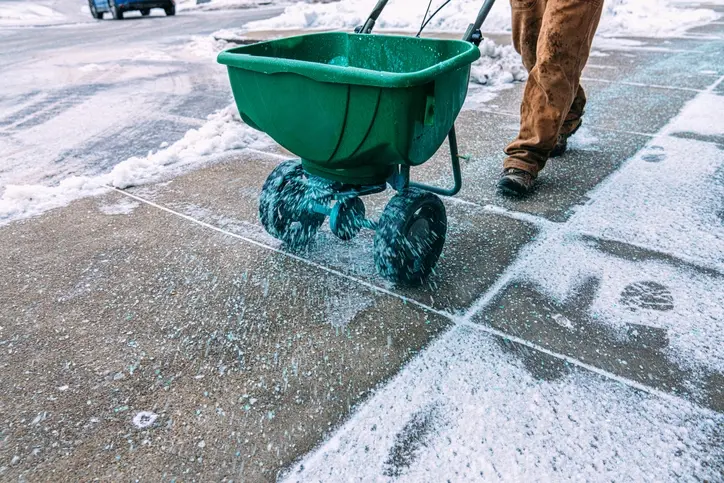
Modern winter maintenance increasingly relies on precision application techniques, including pavement temperature monitoring, brine pre-treatment, and calibrated spreading equipment to reduce unnecessary salt use while maintaining safety.
Environmental Impact of Road Salt
Canada uses millions of tonnes of road salt annually to maintain safe winter transportation networks. While essential for public safety, excessive salt application can increase chloride concentrations in soil, groundwater, and freshwater ecosystems.
Research has linked elevated chloride levels to potential impacts on:
-
Vegetation and roadside landscaping
-
Concrete and infrastructure corrosion
-
Soil chemistry and groundwater quality
-
Freshwater ecosystems and aquatic species
Responsible winter maintenance focuses on using the minimum effective amount of salt, applied only where and when it is needed.
Salt Runoff, Wildlife & Aquatic Ecosystems
Winter operations in Vancouver are increasingly influenced by material supply conditions.
In coastal regions such as Metro Vancouver and the Fraser Valley, road salt runoff can enter stormwater systems that discharge into streams, rivers, and marine environments.
Because stormwater systems often flow directly into nearby waterways, excessive salt application may contribute to elevated chloride concentrations in sensitive aquatic ecosystems.
Responsible winter maintenance helps reduce environmental load while maintaining safe walking and driving conditions — particularly in dense urban areas where stormwater runoff can move quickly into surrounding watersheds.
The goal is not “more salt”, but the right amount, applied at the right time, on the right surfaces.
Salt Supply, Shortages & Alternative Ice Control Strategies
Winter operations can also be influenced by road salt supply conditions.
During unusually active winter seasons, salt availability may tighten due to national demand spikes, transportation delays, or production limitations.
When supply becomes constrained, municipalities and private winter operators may adjust operational strategies.
Common adjustments during supply shortages include:
-
Blending salt with sand or grit to extend supply
-
Optimizing application rates using pavement temperature data
-
Prioritizing plowing and mechanical snow removal over repeated salting
-
Targeting treatment to high-risk pedestrian areas such as entrances and sidewalks
-
Implementing anti-icing techniques such as liquid brine application before storms
Anti-icing strategies — including pre-wetting salt or applying brine solutions before snowfall — can reduce the total amount of salt required while maintaining surface safety.
Because freeze–thaw cycles may occur repeatedly during coastal winters, disciplined material management and precision application are essential to balancing environmental protection with public safety.
Frequently Asked Questions About Snow Removal in Canada
Direct answers to common snow removal, cost, compliance, and winter service questions.
Snow removal costs in Canada vary depending on property size, service frequency, and location. Residential snow removal typically ranges from $75 to $250 per visit, while seasonal contracts may range from $1,500 to $5,000 depending on driveway size and regional snowfall.
Commercial and strata properties often use seasonal contracts or per-event pricing. Commercial snow removal can range from $250 to $1,500 per event, while large commercial sites and multi-building strata properties may require seasonal contracts ranging from $4,000 to $45,000 or more depending on the property footprint and service scope.
Because winter conditions vary significantly across Canada, professional snow removal services often include 24/7 monitoring, plowing, de-icing, and ice management to maintain safe access throughout the season.
In most Canadian municipalities, property owners or occupiers are responsible for clearing snow and ice from the sidewalks adjacent to their property.
Municipal bylaws typically require sidewalks to be cleared within 12 to 24 hours after snowfall ends, although exact requirements vary by city. For example, Vancouver requires sidewalks to be cleared by 10:00 AM the morning after snowfall.
Failure to comply with local snow removal bylaws may result in municipal fines or the city arranging removal and billing the property owner.
Because requirements vary by municipality, property owners should always review the specific bylaws for their city.
Professional snow removal services typically include a combination of snow clearing and ice management designed to keep properties accessible and safe during winter conditions.
Common services include:
• Snow plowing for parking lots and driveways
• Sidewalk snow clearing
• Ice control and de-icing with salt or sand
• Anti-icing treatments before storms
• Snow hauling when accumulation becomes excessive
• 24/7 weather monitoring and dispatch
For commercial and multi-unit properties, winter maintenance plans may also include documentation, service logs, and site inspections to help reduce liability risk.
Snow plowing refers to pushing snow off roads, parking lots, or driveways using plow-equipped trucks or tractors.
Snow removal is a broader term that may include hauling snow away from the property when accumulation becomes too large to simply push aside.
In many Canadian cities with heavy snowfall, snow removal involves loading snow into trucks and transporting it to designated snow storage sites.
Ice is often more dangerous than snowfall because it can form quickly and is difficult to see.
In many parts of Canada, especially coastal regions like British Columbia, freeze–thaw cycles create black ice even when snowfall is minimal.
Effective winter maintenance therefore focuses not only on removing snow, but also on monitoring pavement temperature, moisture, and refreeze conditions to prevent ice formation.
Ice management may include salting, sanding, anti-icing treatments, and proactive monitoring of winter weather conditions.
Yes. In Canada, slip-and-fall claims are generally governed by provincial occupiers’ liability laws, which require property owners and occupiers to maintain reasonably safe premises.
If snow or ice hazards are not addressed within a reasonable timeframe, injured individuals may pursue legal claims for damages.
However, liability usually depends on whether the property owner took reasonable steps to prevent or address the hazard, rather than simply whether a fall occurred.
A professional snow removal company should provide reliable winter maintenance designed to maintain safe access during severe weather conditions.
Key qualities include:
• 24/7 weather monitoring and proactive dispatch
• Professional equipment such as plow trucks and spreaders
• Ice management and salting capability
• Written service agreements outlining response triggers
• Liability insurance and worker safety coverage
• Clear communication and service documentation
Reliable winter contractors focus on preventing hazards rather than reacting after conditions become dangerous.
Black ice is a thin, transparent layer of ice that forms when moisture freezes on pavement surfaces.
Because black ice often blends with the pavement beneath it, it can appear as wet pavement rather than ice. This makes it extremely hazardous for pedestrians and vehicles.
Black ice commonly forms during freeze–thaw cycles, when daytime temperatures rise above freezing and overnight temperatures fall below 0°C.
Shaded sidewalks, parking structures, and sloped entrances are particularly vulnerable to black ice formation.
Seasonal snow removal contracts provide consistent winter maintenance throughout the entire snow season.
Instead of paying per storm or per visit, property owners pay a fixed seasonal rate covering monitoring, snow clearing, and ice management for the full winter period.
Seasonal agreements help ensure that service is available during major storms when contractor capacity is limited, while also providing predictable winter maintenance costs.
Modern snow removal increasingly relies on weather data, pavement temperature monitoring, and predictive modeling to determine when treatment is required.
Advanced winter monitoring platforms analyze multiple environmental factors including air temperature, surface temperature, precipitation, and moisture conditions.
This allows snow removal providers to treat surfaces before hazardous ice forms, improving safety while reducing unnecessary salt application.
Snow Season Has Started — Compare Quotes Before Contractor Capacity Fills